Computer Science is the study of how computers solve problems, process information, and interact with the world. To understand how it all works under the hood, we can break it down into five foundational pillars: Data Manipulation, Computer Architecture, Operating Systems, Network Fundamentals, and Computers in Society.
“Computer science is no more about computers than astronomy is about telescopes.” Edsger W. Dijkstra
Data Manipulation
At their core, computers don’t understand words, images, or music—they only understand binary (1s and 0s), representing electrical switches turned ON or OFF.
- Abstraction: We group these tiny bits into bytes to represent numbers, letters, and colors.
- Logic & Algorithms: Through logic gates (AND, OR, NOT), computers perform calculations. An algorithm is just a step-by-step recipe that tells the computer how to manipulate this data to solve a specific problem.
Computer Architechture
Computer architecture refers to how physical hardware components are organized and interact to execute instructions.
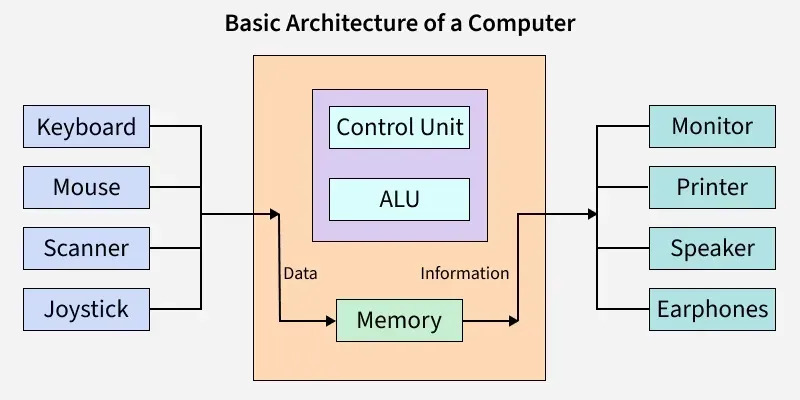
The key parts include:
- Input/Output (I/O): Devices like keyboards, screens, and mice that let humans interact with the machine.
- CPU (Central Processing Unit): The “brain” that fetches instructions from memory, decodes them, and performs calculations.
- Memory (RAM): Temporary, fast workspace used while programs are actively running.
- Storage (SSD/HDD): Permanent storage where files and operating systems live even when the power is off.
Operating Systems (OS)
Hardware alone is just a fancy paperweight; it needs an Operating System (like Windows, macOS, Linux, or iOS) to manage it. The OS acts as the bridge between software applications and the physical hardware.
- Resource Management: It decides which program gets CPU time and how memory is shared.
- File Management: It organizes files and folders on your storage drive.
- User Interface: It provides the visual environment or command line you use to click around and open apps.
Network Fundamentals
Computers become exponentially more powerful when they can talk to each other. Networking is the system that connects devices globally.
- Packets: Data isn’t sent all at once; it is broken down into small chunks called packets, sent across networks, and reassembled at the destination.
- Protocols: Rules (like TCP/IP and HTTP) that ensure different devices from different manufacturers can understand each other.
- The Internet: A massive global network of interconnected smaller networks, routers, and servers.
Computer in Society
Technology doesn’t exist in a vacuum, it deeply shapes and is shaped by human culture, laws, and ethics. This pillar explores:
- Privacy & Security: Protecting personal data, encryption, and understanding the risks of cyber threats.
- Ethics & AI: Questions around automation, bias in algorithms, copyright, and the societal impact of artificial intelligence.
- Digital Inclusion: Ensuring technology is accessible and beneficial across different communities and socioeconomic groups.